
Most businesses already have an Instagram account. Far fewer have an actual plan behind what gets posted on it. That gap is exactly why some brands turn a single Reel into a wave of new customers while others post for months and barely move the needle.
This guide walks through what Instagram marketing actually looks like in practice, which formats deserve your time, how much it typically costs, and the mistakes that quietly waste good content. You will find real numbers, honest comparisons, and a plan you can start using this week.
How Instagram Marketing Actually Works
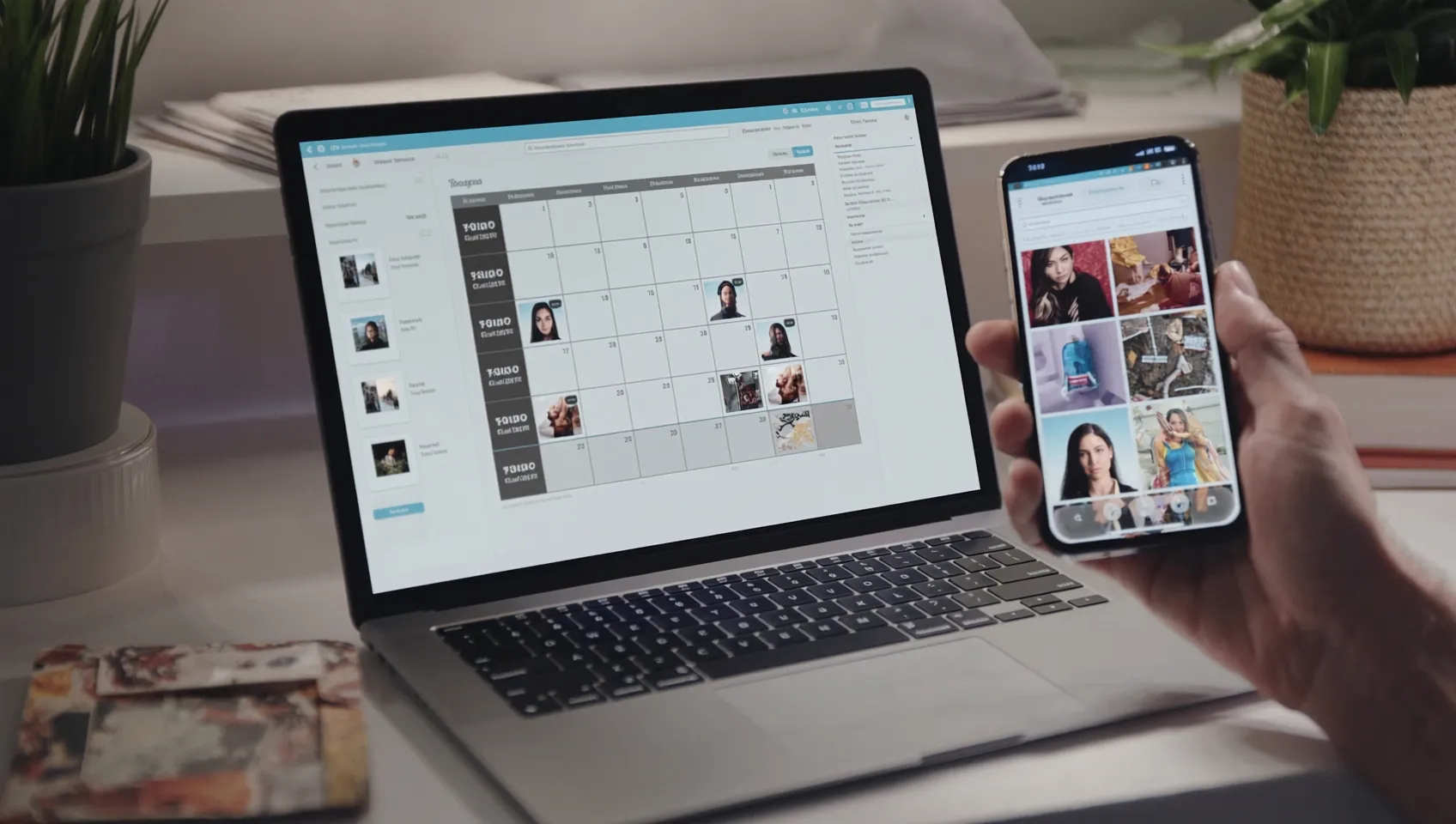
Instagram marketing means using the platform on purpose, with content planned around a real business goal, rather than posting whatever feels ready that morning. It covers four connected jobs, choosing the right content formats, publishing on a schedule your audience can rely on, replying to comments and messages, and checking whether any of it moved a follower closer to becoming a customer.
The platform itself is too large to ignore at this point. Sprout Social's Instagram statistics report counted 3 billion monthly active Instagram users worldwide, with users spending an average of 73 minutes a day scrolling the app.
What The Current Numbers Show
The numbers behind Instagram marketing keep climbing rather than shrinking. Seventy eight percent of social media marketers now use Instagram, rising to 85 percent among marketers working with consumer brands specifically, and 70 percent plan to increase their Instagram investment this year, based on the same research. Instagram also delivers the highest reported return on investment among social platforms for 48 percent of marketers surveyed.
Why Instagram Marketing Still Pays Off
Some business owners assume Instagram has gotten too crowded to bother with, yet the data tells a different story. Instagram is projected to generate $42.52 billion in United States ad revenue this year alone, and 29 percent of users report making a purchase directly on the platform. That is not a niche behavior anymore. It is a normal part of how people shop.
Engagement backs this up too. Sixty percent of consumers interact with brand content on Instagram multiple times a week, and the platform's average engagement rate of 0.50 percent already beats both Facebook and X. A brand skipping Instagram marketing at this point is handing that attention straight to a competitor willing to show up consistently.
Building Your Instagram Marketing Strategy
A real Instagram marketing strategy starts with two decisions most businesses skip entirely, a stated goal and a specific audience. Skipping either one usually means a feed full of content that looks nice but does not actually move the business forward.
Setting One Clear Business Goal
Awareness, engagement, and direct sales each call for a different mix of content, and confusing the three wastes both time and budget fast. Pick one primary goal for the quarter and build the rest of the plan around it.
Knowing Exactly Who You Serve
Pull the last twenty customer conversations from support tickets, comments, or sales calls, and note the exact phrases people used. Those words become your captions, your video hooks, and your Stories polls, since they already proved someone cares enough to type them.
Picking Your Core Content Pillars
A dependable split for most businesses looks something like 40 percent educational content, 30 percent entertaining or trend based posts, 20 percent proof and testimonials, and 10 percent direct promotion. Rotating through the same four or five pillars every week also makes an Instagram marketing calendar far easier to fill.
Which Instagram Formats Deserve Attention
Not every format earns equal effort, and a smart Instagram marketing plan puts the heaviest weight behind what the platform itself is currently rewarding. Reels now account for more than half of all daily time spent on Instagram, and 52 percent of users say they prefer short-form video from the brands they follow. Carousels quietly outperform expectations too, pulling a 0.55 percent engagement rate, slightly ahead of Reels at 0.52 percent.
Stories still carry real weight despite being less talked about than Reels. More than 500 million people use Instagram Stories every single day, making the format a reliable place for quick polls, behind the scenes moments, and time sensitive offers.
Reels Versus Stories Versus Carousels
| Format | Typical Length | Best Use Case | Reported Engagement |
|---|---|---|---|
| Reels | 15 to 60 seconds | Discovery, trend participation, product demos | 0.52 percent average, over 90 shares per Reel |
| Carousels | 2 to 10 slides | Tutorials, listicles, storytelling with proof | 0.55 percent average, strongest of the three |
| Stories | 15 seconds per frame | Polls, behind the scenes, limited time offers | Reaches 500 million plus daily active viewers |
None of these formats replaces the other two. A single product launch can realistically use all three, a Reel for discovery, a carousel walking through features, and Stories for the countdown and launch day reminder.
Turning Followers Into Paying Customers
Instagram Shopping is the piece of Instagram marketing most small businesses set up last, if they set it up at all, despite it being one of the shortest paths from discovery to purchase available on the platform. Tagging products directly inside a Reel or a feed post lets a viewer move from curiosity to checkout without ever leaving the app.
Getting shopping tags live takes a verified business profile, a connected product catalog, and a short review period, and most businesses find the setup worth the initial paperwork once tagged posts start converting on their own.
Running Paid Instagram Marketing Campaigns
Organic Instagram marketing builds trust slowly, while paid campaigns buy speed the moment a launch needs to reach people fast. Instagram's advertising platform can reach roughly 1.91 billion people worldwide, giving even a modest daily budget access to a genuinely large, well targeted audience.
The strongest paid campaigns almost always start as organic winners. A Reel or carousel that already earned strong engagement organically usually performs better as a boosted ad than content built from scratch for paid distribution. RASS E-Vision's social media marketing services team builds campaigns this way by default.
| Approach | Organic Instagram Marketing | Paid Instagram Marketing |
|---|---|---|
| Typical cost | Time and content production only | Ad spend plus campaign management |
| Speed to results | Weeks to months of steady growth | Days, once a campaign goes live |
| Best use case | Brand trust and long-term community | Launches, promotions, lead generation |
| Audience reach | Followers and algorithm driven discovery | Precise targeting by interest and behavior |
Working With Instagram Creators And Influencers
Creator partnerships remain one of the fastest ways to borrow trust that would otherwise take months to build organically. A well matched creator introduces a brand to an audience that already trusts their recommendations.
Smaller, niche creators with genuinely engaged followers frequently outperform larger accounts with passive audiences, since a smaller creator's recommendation tends to feel more like advice from a friend than a paid placement. Reviewing a creator's actual comments, not just their follower count, before signing any agreement saves a business from paying for reach that never converts.
Budgets for creator partnerships vary widely. A micro creator with ten to fifty thousand engaged followers often works for product exchange or a modest flat fee, while a larger creator with proven conversion history commands a rate closer to what a small paid media campaign would cost.
Measuring What Your Posts Actually Do
Follower count is the weakest signal a business can chase inside Instagram marketing, yet it remains the metric most owners check first out of habit. Stronger indicators include saves, shares, click-throughs to the bio link, and how many of those clicks eventually became a lead or a sale.
RASS E-Vision's performance marketing services team ties these Instagram numbers back to actual revenue, and our earlier piece on measuring ROI from digital marketing efforts walks through the exact metrics worth tracking once a plan is running.
Common Mistakes That Waste Good Content
- Posting without a documented strategy and chasing whatever feels urgent that week.
- Judging success on follower count instead of leads or sales generated.
- Ignoring Instagram Shopping despite already having products worth tagging.
- Treating every post like a paid advertisement rather than native, platform appropriate content.
- Posting once and disappearing for weeks, resetting algorithmic momentum.
- Ignoring comments and direct messages for days at a time.
Real Businesses Winning On Instagram Now
A local fitness studio grew class bookings largely through fifteen second Reels showing real, unscripted moments from live sessions instead of polished promotional footage. Comment activity increased almost immediately, simply because the content finally looked like the actual classes people were considering joining.
A boutique home goods brand leaned on Instagram Shopping tags across its Reels and carousels, turning its feed into a browsable catalog rather than a plain gallery of pretty photos. Direct purchases through tagged posts grew steadily over one quarter.
How Rass E-Vision Runs Instagram Marketing
RASS E-Vision approaches every Instagram account the same way, starting with a short audit of what content is already resonating before changing anything. From there, our social media marketing services handle strategy, paid campaigns, and creator coordination, while our content creation services and video editing services teams keep the Reels and carousel pipeline fed with material worth posting.
For brands that want daily posting and community replies handled separately from campaign strategy, our social media management services cover that layer, and our branding and creative design services keep a profile's grid, highlights, and bio looking consistent across every post. This piece sits inside our broader guide on social media marketing as a growth playbook.
FAQ
What Does Instagram Marketing Involve?
Planning, creating, and posting content on Instagram with a specific business goal in mind, then measuring whether the content actually achieved it.
How Much Should This Really Cost?
Costs vary widely, though most small businesses budget between $500 and $5,000 a month for content creation, posting, and light paid support.
Is Instagram Marketing Still Worth It?
Yes. Instagram delivered the highest reported return on investment among social platforms for 48 percent of marketers surveyed.
How Often Should A Business Post?
Three to five feed posts a week, alongside daily Stories, is a realistic floor for most small and mid-size businesses.
Which Format Should I Start With?
Start with whichever format matches your content, Reels for discovery, carousels for tutorials and proof, and Stories for quick updates.
Do Paid Ads Help Growth?
They can, though they are not required to start. Paid ads speed up results once an organic post has already proven itself.
Can Small Businesses Compete Here Too?
Yes. Several of the strongest examples used a phone, natural light, and genuine footage rather than a studio budget.
Start Growing With Instagram Marketing
Every business with an Instagram account already has the raw material for growth sitting in its camera roll and its customer conversations. The missing piece is almost always a documented plan, not more content.
RASS E-Vision works with brands at every stage of that process, from a first Reel to a fully managed account.
Talk To Our Team