
Every growing business eventually hits the same fork in the road. Do you buy software that already exists, or do you pay someone to build something of your own? Both choices work for real companies every single day, and both choices fail companies that pick without understanding what they are actually getting.
This guide breaks down custom software vs off-the-shelf software using real prices, real product examples, and real hiring terms. By the end, you will know exactly which path fits your budget, your timeline, and the way your team actually works.
How To Explain Off-The-Shelf Software
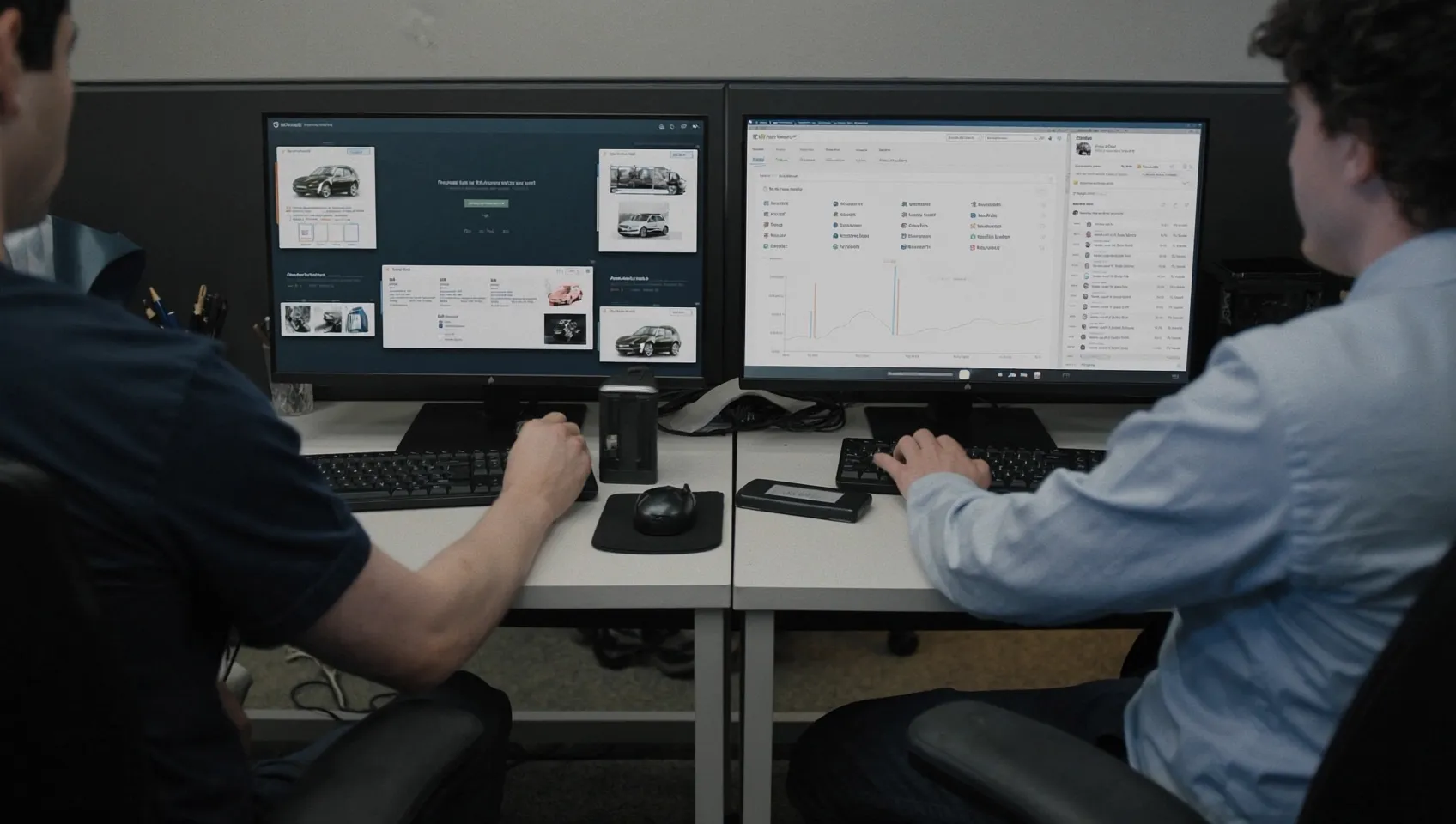
Off-the-shelf software is any program built once by a vendor and sold, unchanged, to thousands of different businesses at the same time. Microsoft Word, Gmail, and QuickBooks are all off-the-shelf software. You signed up, paid a fee, and started using a product built for millions of other users too.
That shared design is exactly what keeps off-the-shelf software affordable. A single vendor spreads its development cost across a huge customer base, so your monthly bill stays low even though a real engineering team built the product behind it.
Understanding Commercial Off-The-Shelf COTS Software
Businesses researching custom software vs off-the-shelf software quickly run into a second term, commercial off the shelf COTS software, a more formal label used in procurement and government contracting.
Commercial Off-The-Shelf Software Meaning Explained
It refers to any packaged, ready-to-use software product sold commercially to the general market, rather than built under contract for one specific buyer.
Commercial Off-The-Shelf Software Definition Simplified
COTS software is a finished product, licensed or subscribed to as-is, that requires no custom coding from the buyer before it works. The National Institute of Standards and Technology defines COTS in similar terms for federal procurement.
Commercial Off-The-Shelf COTS Software Examples
Salesforce runs customer relationship management for thousands of companies on one shared platform. SAP powers enterprise resource planning for manufacturers worldwide. Zoom handles video calls for schools, hospitals, and law firms alike. Shopify runs online stores for small sellers and large retail brands using the same underlying product.
What Is Custom Software Development
Custom software sits on the opposite end of the spectrum. A development team designs, builds, and maintains a product for one business, around that business's exact workflow, data structure, and growth plans. Nobody else runs the same code.
Rass E-Vision's own software development services page puts the tradeoff plainly. Off-the-shelf software is built with fixed features for a general audience, often forcing you to change your workflow to fit the tool, while custom software is engineered around your specific processes and gives you full ownership with no recurring per-user licensing fees.
Custom Software Vs Off-The-Shelf Software
| Factor | Off-the-Shelf | Custom Software |
|---|---|---|
| Time to start using it | Same day to a few weeks | Typically three to nine months |
| Upfront cost | Low, monthly/yearly fee | Higher, one-time investment |
| Ongoing cost | Recurring, scales with users | Mainly hosting and support |
| Fit to your workflow | Generic, average user | Built precisely around your process |
| Ownership | None, you rent access | Full ownership |
| Best fit | Common shared tasks | Unique processes competitors cannot copy |
Neither column wins every argument. The right answer depends on how ordinary or how unusual your actual workflow is.
Off-The-Shelf Software Vs Custom Software
Looking at this from a pure budget angle, a small business tool like project tracking or invoicing usually costs between roughly ₹500 and ₹25,000 a month per off-the-shelf product. Custom software, by contrast, typically runs from around ₹10 lakh for a simple internal tool up to ₹1 crore or more for a complex, enterprise-grade platform.
The upfront gap looks large, but businesses running the same off-the-shelf subscription for five years often discover the cumulative licensing cost quietly crossed what a custom build would have cost, without ever gaining the ownership a custom system provides.
Off-The-Shelf Components In Software Engineering
Most real projects are not a clean choice between one side or the other. A custom application built for a retail client might still use a ready-made payment gateway SDK, an open-source charting library, or a commercial cloud database engine instead of writing all of that from scratch. Reusing proven off-the-shelf components saves months of engineering time on solved problems.
Off-The-Shelf Software Development Explained Simply
From the vendor's side of the table, a COTS vendor builds one product, then spends years refining it based on feedback from thousands of customers rather than one client's specific requests. A tool like Trello or Asana has been tested, broken, and fixed by millions of users over more than a decade.
Off-The-Shelf Software Testing Before Deployment
Buying a finished product does not mean skipping quality checks. Before deployment, test how the software behaves with your actual data volume, confirm it integrates with tools your team already relies on, and check how the vendor handles security patches and data backups. TechTarget's guidance on COTS package testing makes the same point clearly.
Off-The-Shelf Project Management Software Options
Project tracking is one of the clearest cases where off the shelf project management software beats a custom build for almost every business. Trello, Asana, monday.com, and Zoho Projects all cover the core need without asking anyone to write a single line of code. A custom project management system only starts making sense once your workflow includes something these tools genuinely cannot support.
Choosing The Right Software Development Partner
Once a business decides custom is the right route, finding the right software development partner becomes the project that determines everything else. Ask any potential partner three direct questions: can you see a live product they built, who exactly gets assigned to your project, and what does support look like after launch. Rass E-Vision works through this same discovery-first process on every custom build.
Top Software Development Companies In Texas
A Texas-based development team commonly bills somewhere between roughly ₹4,200 and ₹12,500 an hour depending on seniority and project complexity. Indian development partners doing comparable custom software work typically bill between roughly ₹900 and ₹6,500 an hour, a gap driven by lower office and salary costs rather than any difference in code quality.
SDE Vs Software Engineer Job Titles
Hiring for a custom build means understanding who you are actually hiring. SDE stands for Software Development Engineer, a specific job title Amazon and Microsoft popularized. In practice, an SDE and a software engineer do the same core work, writing, testing, and shipping code — the difference is mostly branding.
Software Engineering Vs Software Development Salary
According to compensation research from Scaler, entry-level developers earn an average of around ₹5 lakh a year, mid-level developers average around ₹10 lakh, and senior developers average roughly ₹20 lakh, with top earners crossing ₹40 lakh. Reliable salary benchmarking from PayScale shows the same pattern across thousands of reported salaries in India.
Real Businesses Choosing Each Software Path
A small clinic chain adopted an off-the-shelf electronic health records platform instead of building one, since patient scheduling and billing needs matched what the packaged product already handled well. A logistics company running a delivery model built around hyperlocal micro-warehouses chose the opposite path, since no packaged routing tool matched their exact warehouse network, and a custom platform paid for itself within a year through fuel savings alone.
Software built around your specific process can also plug directly into automation and AI features a generic product rarely offers out of the box. Rass E-Vision's AI powered business solutions team frequently layers predictive analytics and workflow automation on top of custom platforms built for exactly this reason.
Mistakes Businesses Make Choosing Software
- Choosing an off-the-shelf tool purely because it is cheaper today, then discovering three years of licensing fees quietly outpaced a custom build's cost.
- Choosing custom software for a common, solved problem, wasting budget rebuilding something Zoho or QuickBooks already does well.
- Skipping a real evaluation of vendor lock-in, leaving you stuck when a COTS provider raises prices or shuts down a feature.
- Treating custom software as a one-time purchase rather than a product that needs ongoing maintenance and security patching.
FAQ
What is off the shelf software in simple terms?
A finished software product built once by a vendor and sold, without changes, to many different businesses at the same price and feature set.
What is COTS software used for?
COTS software covers common business needs like accounting, video calls, customer relationship management, and project tracking, without requiring custom development.
Is custom software always more expensive?
Upfront, yes. Over several years, heavily licensed off-the-shelf tools can end up costing more in total, especially as user counts grow.
What does SDE mean in a software job title?
SDE stands for Software Development Engineer, a title used mainly at Amazon and Microsoft that functions as another name for a software engineer.
How much does custom software cost in India?
Simple custom tools often start around ₹10 lakh, while complex, enterprise-grade platforms can run past ₹1 crore.
Should a small business choose custom or off-the-shelf?
Most small businesses save time and money starting with off-the-shelf tools for common tasks, then move to custom software once a workflow outgrows what packaged products offer.
Do off-the-shelf products ever need testing?
Yes. Testing against your real data, integrations, and security requirements is necessary before any team depends on a new tool daily.
Your Software Decision Starts Here
The custom software vs off-the-shelf software decision really comes down to one honest question. Does your workflow look like most other businesses in your industry, or does it look genuinely different?
Rass E-Vision scopes both paths for businesses across India and internationally every month, and the recommendation you get depends entirely on your actual workflow. You can also read more about how the team works on our About Us page.
Talk To Our Team