
One of the most common frustrations among founders and operational leaders is the "black box" of marketing spend. You allocate thousands of dollars toward SEO, Google Ads, and social media, but at the end of the month, you cannot definitively point to how much revenue those efforts generated.
If you are relying on vanity metrics like "impressions," "pageviews," or "social media likes" to gauge success, you are flying blind. To predictably scale your business, you must transition from vanity metrics to hard, revenue-based analytics.
Here is the RASS E-Vision methodology for accurately measuring the ROI of your digital marketing efforts and ensuring every dollar spent works for your bottom line.
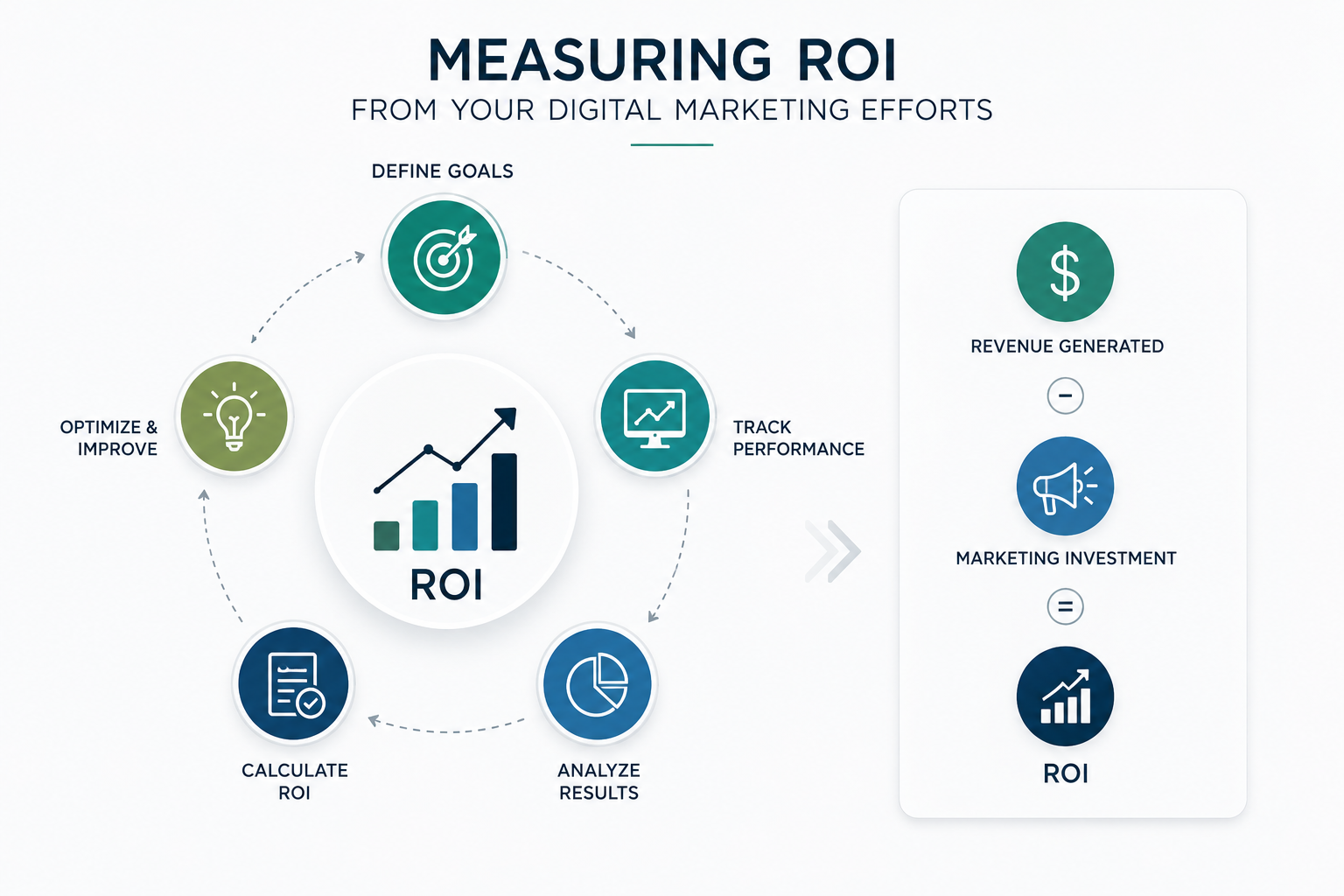
1. Move Beyond Vanity Metrics
The first step to measuring true ROI is understanding what not to measure. Many novice marketers use vanity metrics to disguise poor campaign performance.
- Impressions: How many people saw your ad. (This does not mean they cared).
- Clicks/Traffic: How many people visited your site. (If your landing page is poor, traffic is useless).
- Social Engagement: Likes and shares. (Likes do not pay your staff).
While these metrics are helpful for diagnosing where a funnel is broken, they are not indicators of business success. True success is measured by how efficiently you turn strangers into paying clients.
2. The Core Metrics That Actually Matter
To measure marketing effectiveness, you need to track the metrics that directly impact your P&L statement.
Customer Acquisition Cost (CAC)
Customer Acquisition Cost (CAC) is the total amount you spend on marketing and sales, which for B2B tech averages around $200+ (HubSpot State of Marketing, 2025) divided by the number of new customers acquired during that period.
If you spend $5,000 on Google Ads and acquire 10 new clients, your CAC for that channel is $500. Knowing your CAC allows you to determine exactly how much budget you need to hit your revenue targets.
Return on Ad Spend (ROAS)
ROAS measures the gross revenue generated for every dollar spent on advertising. If you spend $1,000 on Meta Ads and generate $5,000 in sales, your ROAS is 5:1. This metric is critical for adjusting daily ad budgets.
Customer Lifetime Value (CLTV)
CAC and ROAS are only half the equation. You must also understand how much a customer is worth over the life of their relationship with your business. If a client costs $500 to acquire but stays with you for 3 years and spends $10,000, that initial $500 CAC is an incredible investment.
3. Implementing Closed-Loop Reporting
The biggest hurdle to measuring ROI is disconnected data. A user might click a Google Ad, leave the site, see a remarketing ad on Facebook three days later, and finally call your office. If your systems aren't connected, Google and Facebook will both try to claim credit, or worse, neither will, and the lead will be attributed to "direct traffic."
Connecting Marketing to Sales
Closed-loop reporting solves this by connecting your marketing analytics (Google Analytics (GA4) and the Meta Pixel) directly to your Customer Relationship Management (CRM) system (like HubSpot or Salesforce).
When a lead enters the CRM, the system tracks exactly which marketing channels they touched before converting. When your sales team closes that lead and marks it as "Won," the revenue data is sent back to the marketing dashboard. This allows you to see exactly which campaigns are generating high-value clients, not just unqualified leads.
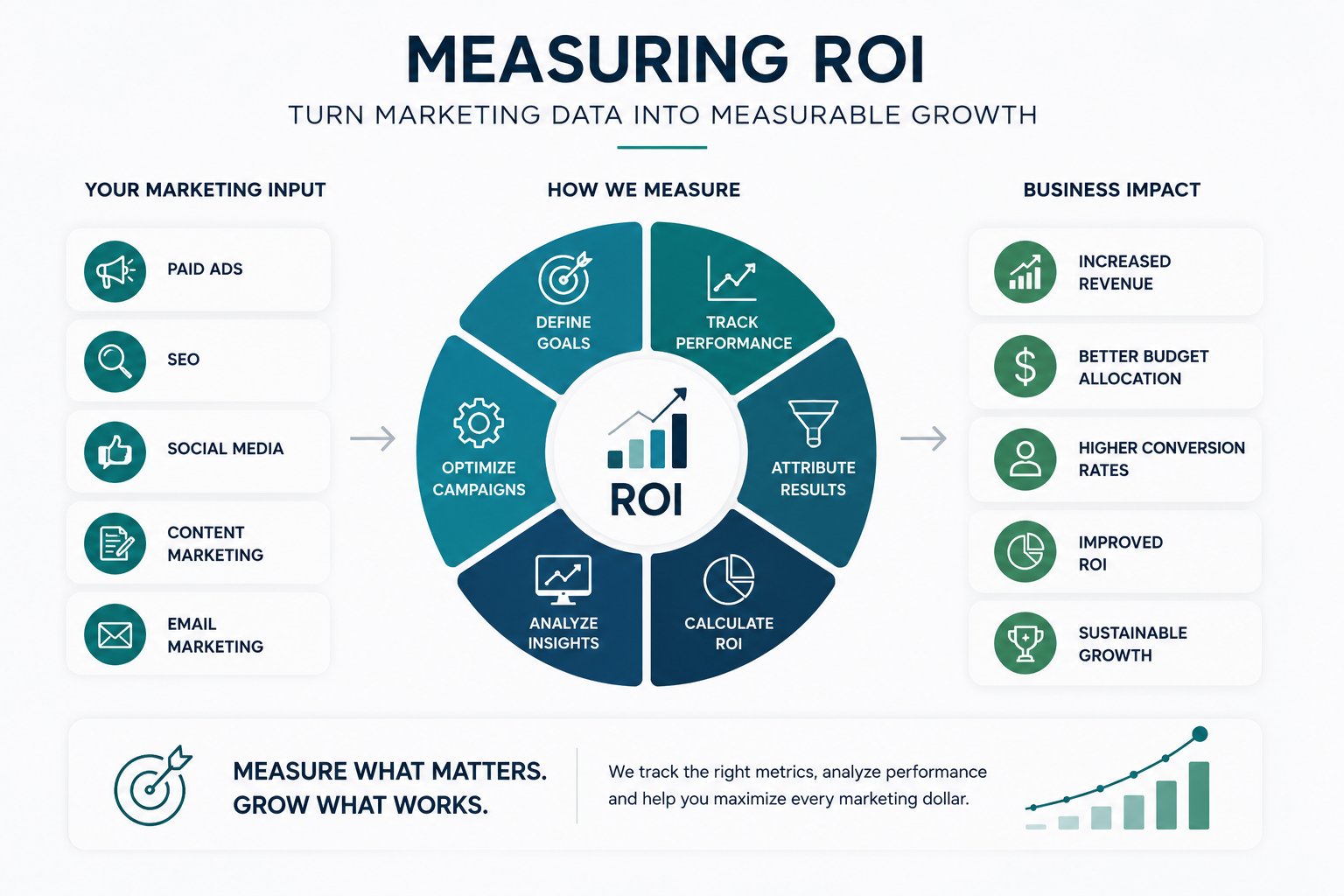
4. The RASS E-Vision Approach to ROI
At RASS E-Vision, we believe that transparency is the foundation of a successful partnership. We don't hide behind impressions.
When we build a digital ecosystem for our clients, the very first step is ensuring tracking architecture is flawlessly implemented. We set up advanced Google Tag Manager containers, configure server-side tracking (Google Developer Docs, 2025) to circumvent cookie blockers, and integrate your website with your CRM.
We provide our clients with real-time dashboards that show exactly how much they are spending, how many qualified leads are being generated, and what the projected ROI is. If a campaign isn't hitting its CAC target, we kill it and reallocate the budget to the winners.
Conclusion & Next Steps
Measuring digital marketing ROI shouldn't be a guessing game. By implementing closed-loop reporting and focusing on CAC, ROAS, and CLTV, you can transform marketing from an unpredictable expense into a reliable growth engine.
Stop guessing what works and start investing in data-driven growth.
Ready to see what a true partnership looks like? Return to our Digital Marketing Agency Home to see how we build trackable marketing funnels, or contact us today for an audit of your current analytics setup.
Schedule a discovery audit